Earning my Technician Amateur Radio Operator
February 18, 2026I recently joined members of “the greatest hobby in the world” - an amateur radio operator. I earned my Technician class operator license about a month back, fulfilling an interest I had way back as child. My official FCC assigned callsign is KE2HOA.
Technician Class License
Technician is the intial / entry level class for operators, allowing limited operation across lower frequency ranges. As my experience grows I plan to pursue the General class to expand my access to those larger bands. (Band size is inverse to Frequency)
First Radio
Of course what good is a driver’s license without a car, and the same can be said to radio operation, you need a radio!
I bought a cheapo radio that had decent ratings from an online retailer specializing in amateur radio equipment. It’s a TyTech TH-9800 Plus. It’s a ‘mobile’ unit meaning it’s intended to be installed in a vehicle, and that’s just what I did.
Vehicle Install
The first step was installing the radio inside my truck. And while you can get power adapters for the cigarette outlet, and magnetic mounts for the antenna, I decided I wanted to do it “right” and go for a cleaner install.
External Antenna
The antenna is mounted externally, which means you need to get it passed into the interior somehow. Slamming the door on a loose cable was not an option, so I did some research and found trucks like mine have a spare grommet installed at the factory.
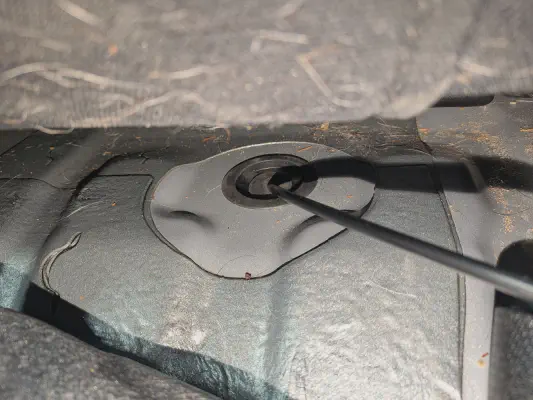
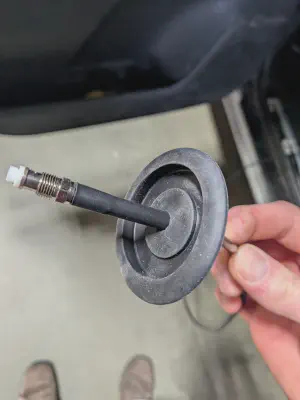
I punched a small hole that allowed me to strech the connector of the RG-58 through with a nice seal.
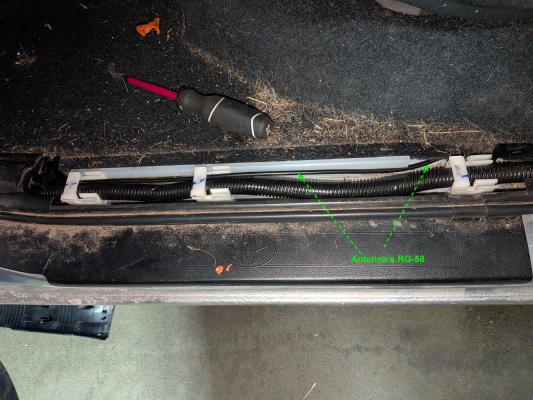
I was then able to conceal that cord underneath the carpet below the seats, and over to the side channels where I ran it up to the front seat. My radio has a neat feature allowing the faceplate to be detached, and installed elsewhere. This means I was able to hide the big bulk part of the radio under my drivers seat, and sneak a small cat6 cord up to the faceplate on my center console.
Power Supply
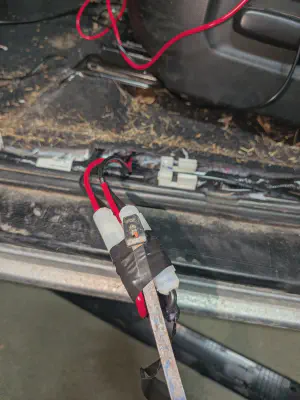
With antenna solved, I also needed to run power. These little radios draw a surprising amount of juice, 10-12 amps for my model. So I needed a dedicated tap with fuse just for the radio. Fuse taps are a common solution that let you plug into the existing fuse panel, and add a new isolated circuit with it’s own fuse.
I pulled those wires from the radio under my seat, and up along the driver’s side channel to just under the steering column where that passenger fuse panel lives.
Close it all up
With the cable run I was able to close up the channels, re-install the plastics under the steering column, and celebrate my hidden radio. Only the faceplate is visible which I mounted right under my climate control.
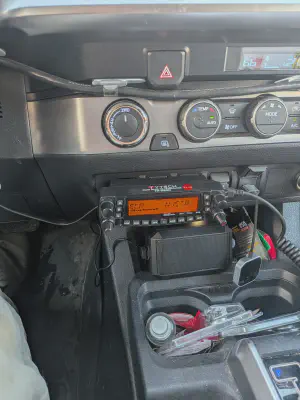
In full disclosure by the time I got to routing the cat6 cable I was loosing steam and I plan to go back and conceal that better to come out through an empty button socket in the console just behind the mount.
Fighting with Chirp, and friending their team
Chirp is an open source programming solution for radios of all makes and models, that provides a user experience worlds ahead of most OEM software.
Unfortunately the “plus” in my Th-9800 Plus meant a whole new chipset and memory structure that was not supported by Chirp. I found an open issue for it, unfortunately it looked like it had not make much progress. But I followed the the procedures outlined and shared my debug logs with the team. They responded within an hour!
Eddie, I’m working on a proper module to handle the issue with the last one. I’ll post here when I get it done and would very much appreciate help testing it as this effort has stalled out a bit due to that being difficult for the OP.
With a bit more back and forth Dan was able to ship a fix allowing Chirp to work with the new model architecture. OSS for the win!
Excellent, thanks very much Eddie, I’ll queue this for the next build!
Learn More
If you’re even curious about operating an amateur radio (ham) I would encourage you to checkout ARRL’s site which has great info. Getting Licensed
/73
KE2HOA